
This website uses cookie or similar technologies, to enhance your browsing experience and provide personalised recommendations. By continuing to use our website, you agree to our privacy policy. You can adjust cookie preferences in Cookie Settings.


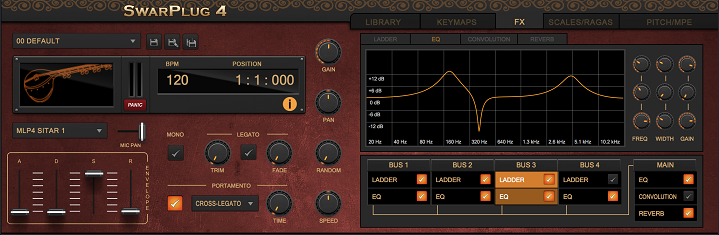
The SwarPlug synth plugin includes Madal Tarang and over 100 other perfectly sampled
virtual Indian instruments. It can be loaded in most VST, Audio Units and AAX compatible DAWs
(Digital Audio Workstations) like Cubase, Logic, Ableton Live, Protools, FL Studio etc... It also
comes with lots of ready-made MIDI loops for each instrument.
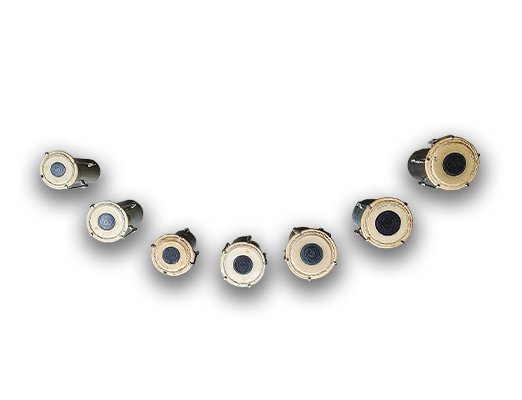
The Madal Tarang takes its name from the Madal, a hand drum popular across Nepal and parts of the Indian subcontinent, and tarang, meaning waves or a series, referring to the arrangement of multiple drums used together to produce melody. It follows the same basic concept as the Tabla Tarang and Jal Tarang: an instrument ordinarily used for rhythm is adapted, through tuning and multiplication, into one capable of playing an actual melodic line.
The Madal itself is a cylindrical hand drum with a slight bulge at its center and two drumheads of different sizes, one at each end, traditionally referred to as the "male" and "female" heads. The body of the drum is made of wood, with hardwoods like teak and sal commonly chosen for their sound quality and durability, while the drumheads are made from goat or buffalo hide stretched over the ends of the body. In its standard form, the Madal is played horizontally in a seated position, with the performer striking both heads at once using the hands and fingers.
To construct a Madal Tarang, multiple Madal drums are tuned to different pitches and arranged together, similar in principle to how a set of tuned dayans forms a Tabla Tarang. Tuning is achieved by tightening or loosening the leather straps that hold the drumheads under tension, allowing each drum to be adjusted to the desired pitch. Because animal-hide drumheads are sensitive to humidity and temperature, and because each drum in the set must be tuned relative to the others, assembling and maintaining a full Madal Tarang requires considerable skill and regular retuning, much like other tuned-drum ensembles in Indian and Himalayan musical traditions.
The Madal Tarang remains an especially rare instrument, far less documented and far less commonly performed than instruments like the Tabla Tarang or Jal Tarang. It is generally associated with folk and regional musical traditions of Nepal and the surrounding Himalayan and northeastern Indian regions, where the standard Madal already holds deep cultural significance as a rhythmic backbone of folk music. Its melodic, multi-drum form represents a specialized extension of that tradition, kept alive by a small number of performers who continue to explore the instrument's melodic possibilities.