
This website uses cookie or similar technologies, to enhance your browsing experience and provide personalised recommendations. By continuing to use our website, you agree to our privacy policy. You can adjust cookie preferences in Cookie Settings.


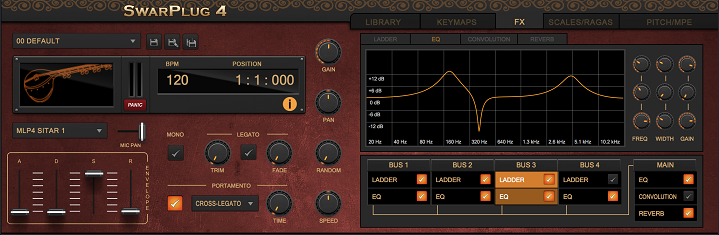
The SwarPlug synth plugin includes Jal Tarang and over 100 other perfectly sampled
virtual Indian instruments. It can be loaded in most VST, Audio Units and AAX compatible DAWs
(Digital Audio Workstations) like Cubase, Logic, Ableton Live, Protools, FL Studio etc... It also
comes with lots of ready-made MIDI loops for each instrument.
The Jal Tarang has its origins in the Indian subcontinent, and its name translates to "waves in water," from jal (water) and tarang (waves). It is a melodic percussion instrument, unlike most percussion instruments that only keep rhythm. Jal Tarang finds mention in ancient Indian texts, including references in the Vedas and later in medieval musical treatises, where it was described as an instrument played at royal courts and religious ceremonies. Sculptures and paintings from various periods of Indian history depict musicians playing rows of bowls, suggesting the instrument's long and continuous presence in Indian culture.
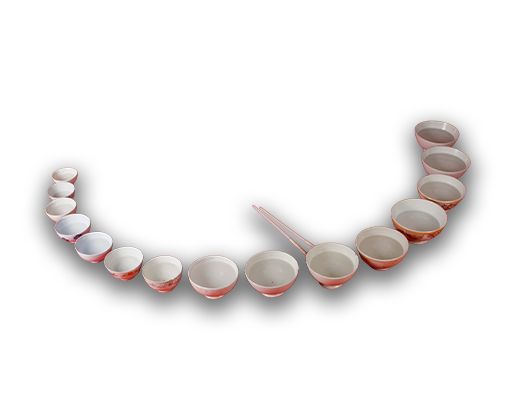
A Jal Tarang conventionally consists of a set of porcelain or china bowls of graduated sizes, arranged in a semi-circle in front of the seated player. Traditionally, bowls were also made of bronze or other metals, though ceramic bowls are most common today because they produce a clearer and more resonant tone. Each bowl is filled with a different amount of water, and the pitch produced depends on the volume of water inside it: less water produces a higher note, while more water produces a lower note. The number of bowls used can vary widely, typically ranging from eight to sixteen or more, depending on the range of notes the player wishes to cover.
The instrument is played by striking the rims of the bowls gently with a pair of thin wooden sticks, called baili, one held in each hand. Skilled players can adjust the pitch mid-performance by adding or removing small amounts of water with a spoon, allowing for subtle tuning during a recitation. Because water evaporates and temperature affects resonance, the instrument requires frequent re-tuning, making it a particularly delicate instrument to maintain and perform on.
The Jal Tarang was once a fairly popular instrument in Indian classical music, particularly in the Hindustani tradition, and was used both as a solo instrument and as an accompaniment to vocal performances. Over the twentieth century, its popularity declined significantly, partly due to the fragility of the bowls, the effort required in tuning, and the difficulty of amplifying its soft sound in larger concert settings. Today, it is considered a rare instrument, kept alive by a small number of dedicated performers and teachers who continue to preserve this centuries-old tradition of making music from water.